
FDA Wildlife Division Hosts Landmark Elephant Conservation Training
FDA Wildlife Division Hosts Landmark Elephant Conservation Training
Monrovia, Liberia — January 16, 2026
The Forestry Development Authority (FDA) Wildlife Division has marked a major milestone in wildlife conservation by hosting Liberia’s first-ever elephant trunk pad training. The one-day training was held on January 16, 2026, at the FDA headquarters and represents a significant advancement in the country’s efforts to protect its elephant population.
The training was supported by the Elephant Protection Initiative Fund (EPIF) in collaboration with other conservation partners. It was designed to strengthen the technical capacity of wildlife personnel in elephant conservation and management, while introducing international best practices for handling and safeguarding elephant parts.
Speaking on behalf of FDA management, Mr. Jerry Yonmah expressed profound appreciation to EPIF for supporting the initiative. He described the training as timely and transformative, noting that it directly addresses longstanding challenges in wildlife protection.
“This training is the first of its kind in Liberia, and it responds to the practical challenges we face in protecting our wildlife parks,” Mr. Yonmah said. “The sophisticated storage system introduced through this process will improve how we manage animal parts data and allow us to better showcase our conservation efforts to visitors.”
FDA Wildlife Manager, Mr. Abednego Gbarway, also praised the initiative, describing it as a significant milestone in strengthening conservation practices within the Wildlife Division. He emphasized that the training would enhance operational standards and reinforce the FDA’s commitment to protecting endangered species.
Representing the Elephant Protection Initiative Fund, Mr. Kiprotich Biwots highlighted the critical importance of adhering to Standard Operating Procedures (SOPs) in safeguarding Liberia’s elephant population. He stressed that proper documentation, storage, and management of elephant parts are essential components of effective conservation and law enforcement.
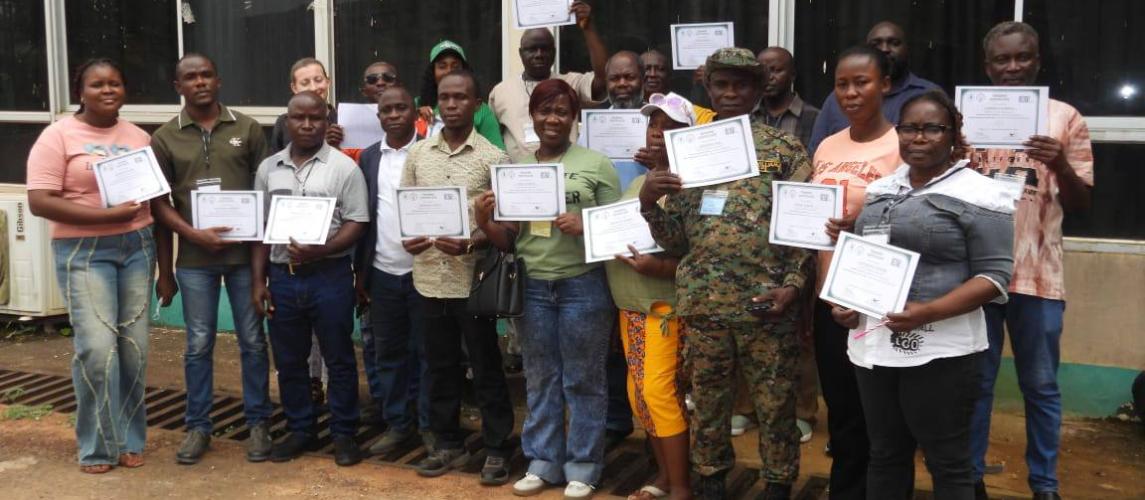
As a result of the training, participating wildlife staff gained enhanced technical skills in elephant conservation, were introduced to a modern storage system for managing animal parts data, and received certificates in recognition of their commitment to wildlife protection.
The FDA Wildlife Division described the training as a new chapter in Liberia’s conservation journey and reaffirmed its commitment to continued collaboration with EPIF and other partners to strengthen wildlife protection and management nationwide.
